Category: Uncategorised

  • Grieving with Nature

    Ill omens have been following me of late. It appears that in every foray I take out to be with Nature, whether wetland, walkway, or garden, there are dead mice on the path I tread. It unnerves me. Only this morning on my walk through some gardens, a baby mouse lay in the path wheezing, in the corner of my eye a cat running to the bushes. I picked her up and tried to warm her with my hands, it was quite apparent that there was little I could do save stay with her whilst she made her final journey from this life to the next. The cycle of death is one we must all make but I grieved for the loss of life of that baby mouse who would no longer cheekily run around with their gentle squeaks of joy. I could feel that this little one was grieving too, those warm images of nest and home not wholly my own imagining. As this mouse lay dying in my hand, the only offering I could make was of companionship, a lesson I had learned only recently, to grieve with her so that it may ease her burden as she made her peace with life.

    It was back in the Spring when I was taught this lesson: that Nature needs us to help grieve with her so that we both may begin to fully heal. We humans have an important role to play in transmuting or composting all the pain and grief that our ecologies and more-than-human friends feel as they struggle to process their silencing, thinning out, and impending death by our hands. Death may be in Nature’s nature, but that does not mean she is without grief. The challenge is in how we perceive Nature, she is either a mechanical process or a higher goddess of wisdom, but both of these strip her of her capacity for emotions, for grief. We want to heal Nature by restoring her ecosystems, we want to find spaces for humans to express their ecological grief, but how often have we thought that our rivers, flowers, mice, or trees may also be holding onto grief that they must also learn how to feel and transform. What if the key to processing this grief is to do so together, hand in hand and heart in heart. At a time of scorched earth, charred corpses, whole forests burnt down, and with no end in sight for the losses we bear witness to, this lesson feels more important than ever.

    I first experienced Nature’s grief with a Woodland near where I lived that has since been felled. Old Oaks, ferns, and fairy homes welcomed you into birch forests and clear waters where fish bit your toes and damsel flies perched on your shoulders to bask in the summer’s heat. You could feel the magical thrumming of a woodland in harmony, where time’s skilful weaving of the love between the beings who called that place home sung the most beautiful symphony. Moss settled on bark, birds singing aloft, earthen mycelial smells underfoot. When I arrived that fateful day, it was all gone, the threads of life strewn about with no reason or rhyme, stumps laid bare, Poplar bodies placed as an impenetrable wall where Oak once stood in welcome. No birds sang that day. The depths of grief I felt was beyond anything I had felt in recent times. From the moment I laid eyes on those tree stumps, it consumed me. I wept and I wept like I hadn’t in years, emotions roiled within that felt so foreign to my usual self. Battles went on inside of me. Fury and anger that humans could commit such atrocities warring against that deep listless pain at the loss of those who may never be recovered. The only victor of these battles was despair; an anchor tied to my foot dragging me down into the depths where I could not breathe. It was too much, there was so much to hold, so once the initial shock subsided, I sat by the stump of old Oak and settled, and I closed my eyes to find stillness.

    What I found in that stillness was that those feelings were not quite my own. My tears were Woodland’s tears, her welled-up grief finding purchase as it coursed through my body, a body that could cry in a human well acquainted grief. It was a peculiar experience, to find myself as a transmuter for more-than-human grief, for it meant that I was both holding and being held, the lines between comforting and grieving became quite hard to define. What was easy to define was Woodland’s pain, her aching loss of Old Oaks wisdom, her rage at the felling of her children and their homes. For her, an old growth rule had been broken, this death and suffering was not for survival, they had not asked consent from the wood-folk, Woodland’s body. She bore deep emotional wounds from this corporeal punishment, and it was eating at her soul. She needed help processing this pain that was stuck. So, I sat and held that grief for her where she could not, I let it course over me as I hyperventilated, one hand in the soil and one on my heart. The only way to transform grief is to feel it wholly and completely. After a while, the emotions were less, I could feel that Woodland had felt recognised in her pain, that she was not alone and she had had help to process it all. As the air cleared within us, the sun bore down, glinting along the hill Oak seedlings who may one day bear the wisdom to remember what it means to process such grief and how sometimes a little help is all you need. That night I sang sweet lullabies on my harp, in my final farewell to the sprites who had not yet been ready to go and I felt healed.  

    I tell this story to make alive the rich emotional worlds and needs of our more-than-human kin and our duty to make space, and even support processing, for them. In white western culture, we often fall into the line of thinking that Nature would be better off without us, that Nature doesn’t need us for their wellbeing. The unprocessed grief at what our ancestors did, and what that system continues to do to the world, obscures our capacity to see that we humans have a vital role to play. We are deeply needed, despite our harms, we are still an essential piece of the ecological whole with critical functions in weaving harmony within the tapestry of life. One of those functions is our emotional and spiritual capacities to hold space, to transmute or compost the grief and trauma that our Earth body holds and to transform them into the vital building blocks for a healed future.

    Now more than ever our world is abounded by ill omens, precursors of tipping points reached and the changed world that awaits. It is no longer a future scenario, a fiction in a modelling prediction, we are fully entering into the crescendo of The Great Grief, of great loss. This summer, the world has been aflame, rivers have dried, upwellings have stopped, and my social media feeds filled with images of charred corpses of beings who called those places home, who were loved by their homes, their spirits of place. Now more than ever we must pay attention to the emotions that are stored within our dying ecologies. What grief can you feel in your heart when you are with them? Are you ignoring the grief within you? What if that grief that you have been ignoring is the grief of the Land, entering through your feet to your heart, asking you to hold space to help transform and release?

    Indeed, this is the hardest thing of all. To be open to and accepting of our own grief, of the pain in our own hearts. I feel it too, a switching off from the world because the death and losses are too great. To open myself up to the grief is to know that I love and that what I love is being lost. I have found no easy answer, it is hard, and heartbreaking, and requires an immense amount of courage, strength, and vulnerability that I often find impossible, especially with my chronically ill body. The only uplifting thing I can say, is that when I sat with Old Oak and I opened myself up to their grief, to my own grief too, I was not only holding but also being held, it was reciprocal. As I grieved for her, she comforted me. There is a wisdom there that is still a mystery to me but to know that opening up to the world, to Nature, is to be held fully and completely is enough for me.

    So, I contemplate these ill omens of dead mice, and I seek the message that they send. The internet is mostly consistent that mice represent what we must pay attention to so we can secure safe homes. It does not bode well for me that these dead mice may represent the death of my home. So, what must I pay attention to as my home dies? I think I must pay attention to where Nature needs me, whether that be challenging policies, or plans, or mindsets, but these mice tell me something more. Like that baby mouse, sometimes what Nature needs is a warm hand to hold them as they make their peace with life, to help them hold their grief, to compost that which is dying so that we may transform these ill omens into fertile ground for the future, for a better today. In our grief, let us not forget that Nature needs us, however we are able to be present, sometimes, simply some kind words to the wind are all that are needed to grow great forests of wisdom.

    Thank you, Nature, for all you teach me, I hope to always be open to recognising you in your many forms. Awen.
  • Lughnasadh’s medicine of Gratitude

    Lughnasadh’s medicine of Gratitude

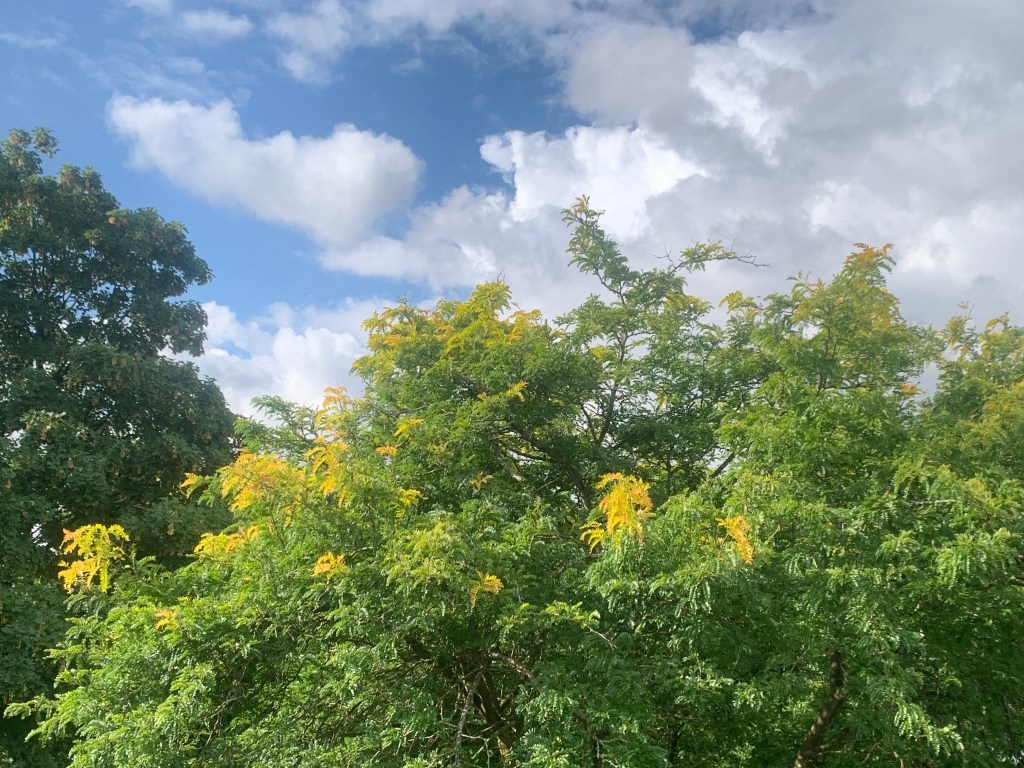
    The leaves of the Tree outside my home started to go yellow at the top of their crown two weeks ago. They were only a few back then, speckles of yellow amidst the deep verdant green, they could almost simply be the Sun’s glimmer as He meets Tree.

    It sounds beautiful, but when I saw them, it evoked a panic within me. I was not ready, I pleaded with the Sky ‘not yet’, summer has only just begun and there’s still so much to do, to live. Then the chilled mornings came with the grey mists that too promised the return of autumn and, again, I met those mists with sadness for the endings to come. I still want to live and grow and explore and swim and sleep outdoors and listen to the Swifts as they swoop and woosh above our eyes, but even they have started their migration back home. How can it be ending when there are so many things I haven’t achieved yet, so many shoots of my own tree that I am trying to grow into being, pushing myself higher and higher because my eternal optimism of what I can achieve knows no bounds. Except Time, of course, Time knows there must be a moment when I have grown all I can for the year and, if I want strong and stable growth, I must return to tending my roots, to reviewing what grew nice and sturdy and what will not survive the coming of the winter months. These are the teachings of Lughnasadh, the festival of celebrating abundance and harvest of gratitude and appreciation for all that has grown so that it may replenish our stores as we approach winter. For me, it is a festival which reminds me to come back to balance, a reminder of rest, after the ecstatic growth of the summer months.

    Perhaps, that is why I have never really felt connected to this festival: I am always seeking more, never content with enough, always short on time to achieve the impossible. Too much of the extremes and not enough of the middle. But not this year, despite my initial sadness, I now look often to my Tree and thank her for the gentle reminder that I have grown enough and, whilst summer is not yet over and there is still some room to grow, it is time to focus my last spurts of growth wisely to those that will persist even in the Cailleach’s frozen maw. Even at the height of summer and growth we must think about death and winter.

    It is this principle of balance, of never really having one without the other, that I have found the most enlightening about deepening my practice with the festivals. It is, perhaps, most culturally apparent in the Winter Solstice where despite being at the threshold of the coldest months to come, at the height of the Cailleach’s reign, it is the birth of the Sun god Lugh that we celebrate. What I once thought were the darkest of times, with months ahead of darkness and cold, is actually the threshold of Life, of returning Light, and the promise of Spring and Summer to come. However, at the Summer Solstice we don’t really celebrate that the days are, from that point on, actually getting darker. We celebrate the height of the reign of the Sun God Lugh, the birth of the Cailleach’s darkness is nowhere in sight. Which, I think, says a lot about how we collectively perceive balance through the Gods we truly celebrate, what we value, and what we reject, myself included. Why do I see the coming of autumn as the end of my growth? Why do I, and all of us collectively, dread the return of Winter? There is the obvious rejection of the Cailleach’s Winter, the fear of death and of the depths which warrants conversation but given the season, I would rather focus on what it means for our relationship with life, growth, Fire and, ultimately, gratitude and plenty.

    Indeed, it is our relationship with gratitude for life that holds the key to our disbalance with constant growth, of never having enough, of always needing more. This issue is structurally embedded in the way our world works. I’m sure we could all rant for hours about how messed up GDP and the global economy’s need for continuous economic growth is, and the resources, the precious lives and time, it consumes and destroy to keep it up. Here, the macrocosm and the microcosm mirror one another perfectly. We can appreciate how destructive continuous growth is for the world and how returning to economies of plenty are needed to help us ride out the global winter that we have brought upon ourselves. So too should we be questioning what constantly seeking continuous personal GDP – growth that is constantly pushing outward fuelled by lack and fear – will do to the precious lives and time that make up our worlds and how they may contribute to our inner cataclysms. I get it, it’s hard sometimes to look back and appreciate, inner growth is not material and not so easily perceptible as a new branch or a blooming flower. Sometimes all the growth we do for years and years is underground, even less visible, and every shoot we try to take upwards gets blown away by the gusts and gales making us feel like we’ve had no growth at all. But time is always moving forward, in this plane at least, and we are always growing, responding, and changing to the thoughts and dreams held in our hearts. We cannot grow strong and true if we do not dream, and dreaming happens when we rest and return back to Earth and to our roots, and surrender our trust to the darkness. And to surrender, we must be OK with where we are, of who we are. Gratitude is our greatest ally amidst the darkest nights of the soul.

    Recently, I have come to experience this principle most deeply through the simple act of making jam with foraged blackberries. The first time I ever foraged, I must have been about five years’ old, we moved to England from South Africa where I encountered my first ever wild blackberries. My dad and I went out with buckets amidst the hedgerows near our home and got stuck in the thorns, fingers purple and punctured. My most visceral memory is how sweet and tasty they were, their deliciousness anchoring the memory of Blackberry firmly in my mind. My entire adult life no blackberries had ever compared, until this year. This year, there are so many that are so sweet and delicious that we have enough to eat and plenty more to make jam so we went out and foraged. The entire time that we are harvesting all I could think of is the joy and gratitude for this harvest of plenty – one berry for me two for the jam. But I am not only thinking about the joy at eating the berries now, I am joyful at the thought of making jam that will last us through the Winter, shared with our loved ones so that we may all remember this joyful abundance of Summer whenever we may need it. For some reason, in the process of making jam, I do not see Winter as the end but as a source of joy, of gratitude, that I have the opportunity to share in the abundant harvests of Summer when our friends the Blackberries too return to Earth. So I think to myself: how I can translate this lesson to my inner growth, what are my own abundant harvests that may nourish myself and others in turn?

    This Lughnasadh, I choose to be grateful for all that I have grown, for all of the joyful moments where I chose to live my life in reverence with Nature, for all the times I showed up for myself, for my health, for my courage to persist growing despite the the gusts of Spring, for constantly staying true to my heart and soul, for these things I can be truly grateful. This year I put out my first shoots after nearly a decade of only growing roots and I can see with my two eyes how much my quiet persistence has paid off. This is the year I found my wings. This practice of looking back in gratitude fills me up with so much joy that I feel like I am looking at the blackberry thickets themselves. I am almost in disbelief at just how much I have grown, my inner world is rich with blooms from all the joy and love that I have shared in these months, and all I had to do was look in gratitude to really see them. These are my strongest branches, those I know will endure and hold me in the coldest of nights.

    So I invite you, reader, to muse with me. What has brought you joy these past few months? It doesn’t matter if there are many or few, sometimes joy can simply be making it out of bed in the mornings or even, finding peace with the need to stay in bed. Joy can be the simple act of a kind world to yourself or the buzz of a bumblebee as they dance amongst the flowers. Sometimes, it is really the smallest joys of all that make for the best harvests. They show us that there is so much to be grateful for if we only look and see. Could these moments of joy be your abundant harvests that will nourish your roots as we begin to return to Earth? If you, like me, feel afraid or melancholic about the return of Winter can you take a step back to appreciate all you have grown, completely independent of material output. You’ve made it this far and that is already worth celebrating. The more we look for abundant harvests in every small detail of our lives, the more our minds see them, so try and find even one or two things that bring you joy, you might find that your blooms are hiding just behind them, a thicket of blackberries deep within.

  • On introductions and being fairy…

    On introductions and being fairy…

    Hi there,

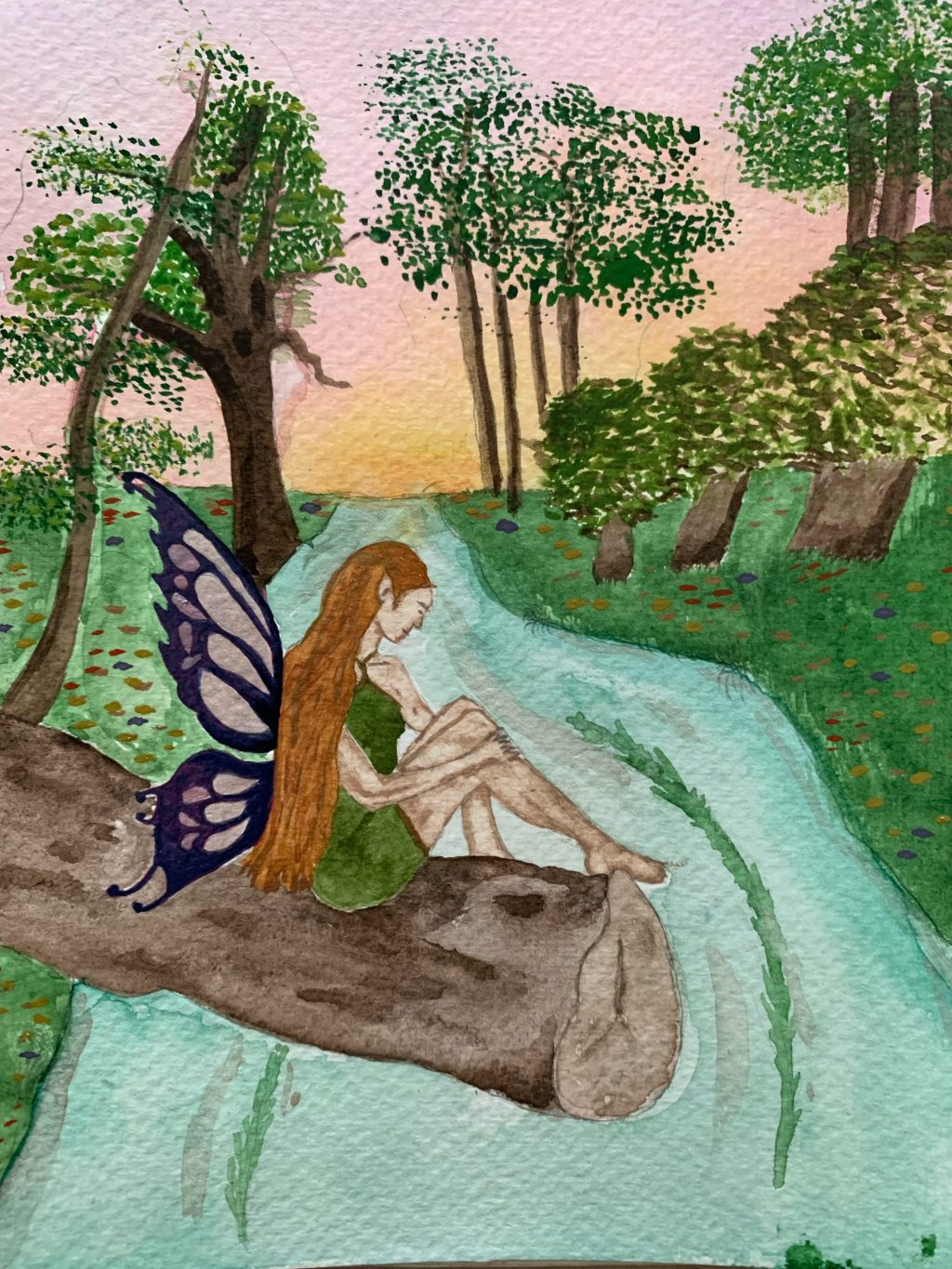
    It’s nice to meet you, my name is Shannon and I am a river fairy. I live deep in an old Oak woodland where three rivers meet. One river, my birth river, flows clear and blue, her waters fed by a chalk spring that you can only find by walking through the mists of the Sacred Isles. This is the river of Salmon, and like Salmon, I can always feel the pull in my heart that one day I will need to make that final long trip upstream and find my way through Her mists. Another river is rather dry, she hails in from arid lands, of pine trees and the cicadas endless buzzing in the summer heat, her waters slightly salty as she embraces the turquoise Sea. This Sea guided me towards my wings, they too are salty in nature, the glimmering turquoise where Sun and Sea dance. This Sea and her Rivers are the place I call home, the Lands that shaped my heart and soul, who first showed me the meaning of belonging. The third River is brown and muddy, hailing in from flat and wet lands as far as the eye can see. She knows of willows and cows, of herons and goldfinches. This River has fostered me, taken me in, and given me the safety for my wings to develop as I became vulnerable, sick, and lost. It hasn’t always been easy to live at this intersection, feeling like I belong everywhere and nowhere at all but as I have grown and come to know myself as fairy, I have learnt to appreciate the beauty in the many waters that flow within me. Magic happens at intersections, at confluences, and I can feel that magic growing deep within me.

    But you’re probably thinking: a river fairy, with wings?! Sounds rather unlikely, perhaps even preposterous. A few years ago, I would have tended to agree, see, I haven’t always been a fairy it’s actually a rather recent event. I used to be a regular human: city life, sitting at a desk all day, getting drunk on the weekend, you know how it goes. That was until someone, somewhere, maybe some Goddess or God, Mother Nature herself, or perhaps my inner self who knew my true form as fairy, decided that it was time. Then, the Earth opened up and swallowed me whole and I fought and I fought until everything was dark and all that I knew, all that I once was, was gone. So I, whatever essence of I that was left, lay suspended in a formless timeless limbo drifting in that empty space with nothing but shadows of a hopeful dream until I felt it. A singular ray of sunshine shining upon my face and illuminating the dark womb in which I was being re-created. It was then that I could grasp, in some distant corner of my subconscious mind, the fairy form I would one day take to heed Nature’s call and walk in the world of magic. It sowed the seeds of intention in my conscious mind and so I changed into fish and began to swim.

    I have taken many forms since then knowing and not knowing where it was leading me only being able to follow the deepest longing in my soul for connection with Mother Nature. In my transformation, I have been Salmon learning to navigate against upstream current, a Spider weaving her new world of silk, a Worm buried and protected deep in the soil, and an Adder shedding her skin and reawakening the power within. Back then, I was always changing, perpetually churning in life’s great washing-machine, until a few months ago something changed. I awoke in a somewhat human form once more, but this form was soft and vulnerable, not quite fully formed, as if I had emerged from a chrysalis with half-formed wings that I had seen only in dreams before. As time has passed, the contours of my Self have become defined, my wings grown from some small grey flaps into big and beautiful works of art. Painted in the translucent blue-green colours of my Rivers and the pink blooming flowers of my inner realm. I finally have something I haven’t felt my entire life: comfort within my body and certainty on the path being created as feet kiss Earth.

    Which leads me to this, to you, I feel like part of my path is to create a space where we can figure out what it means to live with magic, with reverence for Nature, in this modern world. A world not really made for people like me, or us – perhaps you too are fairy. I have come to believe that we all have wings within and a soul’s desire to connect and celebrate the magic of the Earth from which we all come. To be fairy reminds me of the absurdity of what is made ‘normal’ in this world. It is much harder to imagine normalising a fairy forced to live far away from the enchanted forests and more-than-human friends spending all day under blue lights, sat alone in front of screens. Yet for us humans, this is all too normal, indeed, it is those who seek out Nature and magic who are deemed rather odd. I have come to see, to experience, that reality is rather upside down and, perhaps, this blog my way of normalising how I experience the world. It is really only sat on the grass, watching the swifts in the sky or the wind in the trees that I feel I can fully breathe. My body, through chronic illness or maybe because now I am fairy, does not function very well if I participate in a ‘normal’ person’s life. Maybe you feel the same too. Maybe you too feel like something is off, but you can’t quite put your finger on it. Maybe you too can hear Nature’s siren song calling us home. However, I must point out, that to be fairy is less about not fitting in, but much more about celebrating everywhere and everyone with whom we do fit in. To be fairy is expansive, joyful, and alive with all more-than-human kin, and they are all just outside our doorstep waiting for us to return home. To be fairy is a lens of love, gratitude, and plenty that expands beyond the narrow confines of human towards all of living beings. Maybe you too feel the joy and recognition in Mother Nature’s magic and want to encounter stories of optimism, love, and reverence. If so, welcome to my page, it’s so great to have you here! The path is always more fun when walked with friends.

    So, what is this page about? In this page, I will share essays, poems, or general musings on what it means to live in reverence and relationship with the magical Natural world. I will share, with a pinch of fairytale, my path to finding connection and wholeness. I hope that by sharing what helped me, it might help you too if you find yourself also somewhat lost. Importantly, this blog is one of my offerings to Nature, to us, to join my voice to our shared Dreaming of a world that nourishes and heals. So I will also share here my thoughts, troubles, and inspirations with the world at large on how we can shift our intentions to work with Nature in a way that is meaningful and find our way back to one another. Too often in my line of work do I hear that those who are made up of European culture do not know how to listen, speak, and engage with Nature as an animate friend or kin. But I have found that we do, so I want to share these teachings from a British Druidic tradition, as someone still very much learning, and how we can integrate this wisdom into our modern age. But even better, perhaps, is that together we can explore some of the questions unanswered, those not yet figured out, and weave our tapestry through collective learning.

    Thank you for being here, I’m so excited for the journey upon which we are about to embark. I wonder which twists and turns this new path will make, which joys and trials it will bring, and where we will be by the end of it. So many unknowns, but as they say, the unknown is just space for infinite possibility and that gives me courage to dive into the deep River and see where it will lead, will you follow me?