Ill omens have been following me of late. It appears that in every foray I take out to be with Nature, whether wetland, walkway, or garden, there are dead mice on the path I tread. It unnerves me. Only this morning on my walk through some gardens, a baby mouse lay in the path wheezing, in the corner of my eye a cat running to the bushes. I picked her up and tried to warm her with my hands, it was quite apparent that there was little I could do save stay with her whilst she made her final journey from this life to the next. The cycle of death is one we must all make but I grieved for the loss of life of that baby mouse who would no longer cheekily run around with their gentle squeaks of joy. I could feel that this little one was grieving too, those warm images of nest and home not wholly my own imagining. As this mouse lay dying in my hand, the only offering I could make was of companionship, a lesson I had learned only recently, to grieve with her so that it may ease her burden as she made her peace with life.
It was back in the Spring when I was taught this lesson: that Nature needs us to help grieve with her so that we both may begin to fully heal. We humans have an important role to play in transmuting or composting all the pain and grief that our ecologies and more-than-human friends feel as they struggle to process their silencing, thinning out, and impending death by our hands. Death may be in Nature’s nature, but that does not mean she is without grief. The challenge is in how we perceive Nature, she is either a mechanical process or a higher goddess of wisdom, but both of these strip her of her capacity for emotions, for grief. We want to heal Nature by restoring her ecosystems, we want to find spaces for humans to express their ecological grief, but how often have we thought that our rivers, flowers, mice, or trees may also be holding onto grief that they must also learn how to feel and transform. What if the key to processing this grief is to do so together, hand in hand and heart in heart. At a time of scorched earth, charred corpses, whole forests burnt down, and with no end in sight for the losses we bear witness to, this lesson feels more important than ever.
I first experienced Nature’s grief with a Woodland near where I lived that has since been felled. Old Oaks, ferns, and fairy homes welcomed you into birch forests and clear waters where fish bit your toes and damsel flies perched on your shoulders to bask in the summer’s heat. You could feel the magical thrumming of a woodland in harmony, where time’s skilful weaving of the love between the beings who called that place home sung the most beautiful symphony. Moss settled on bark, birds singing aloft, earthen mycelial smells underfoot. When I arrived that fateful day, it was all gone, the threads of life strewn about with no reason or rhyme, stumps laid bare, Poplar bodies placed as an impenetrable wall where Oak once stood in welcome. No birds sang that day. The depths of grief I felt was beyond anything I had felt in recent times. From the moment I laid eyes on those tree stumps, it consumed me. I wept and I wept like I hadn’t in years, emotions roiled within that felt so foreign to my usual self. Battles went on inside of me. Fury and anger that humans could commit such atrocities warring against that deep listless pain at the loss of those who may never be recovered. The only victor of these battles was despair; an anchor tied to my foot dragging me down into the depths where I could not breathe. It was too much, there was so much to hold, so once the initial shock subsided, I sat by the stump of old Oak and settled, and I closed my eyes to find stillness.
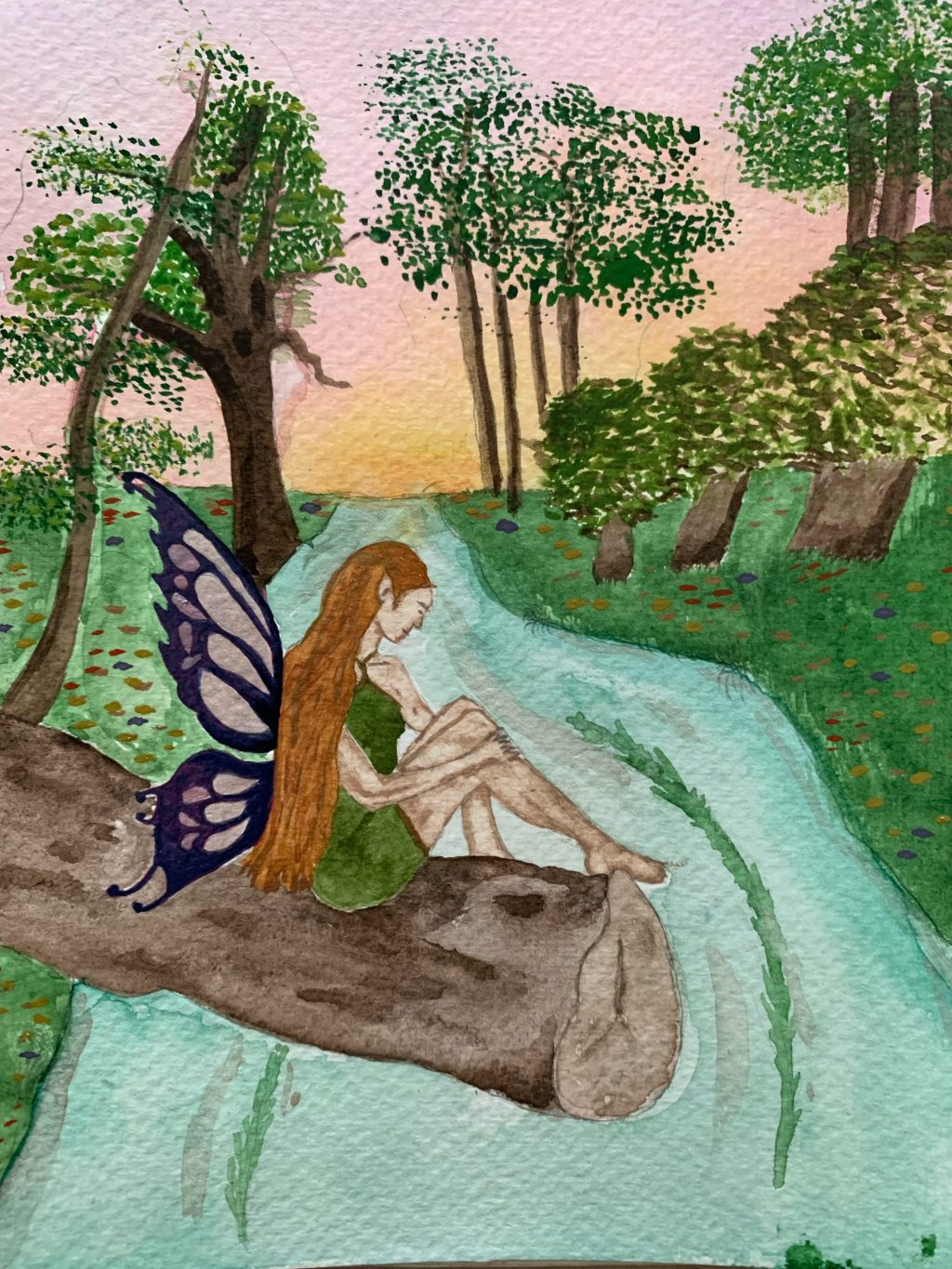
What I found in that stillness was that those feelings were not quite my own. My tears were Woodland’s tears, her welled-up grief finding purchase as it coursed through my body, a body that could cry in a human well acquainted grief. It was a peculiar experience, to find myself as a transmuter for more-than-human grief, for it meant that I was both holding and being held, the lines between comforting and grieving became quite hard to define. What was easy to define was Woodland’s pain, her aching loss of Old Oaks wisdom, her rage at the felling of her children and their homes. For her, an old growth rule had been broken, this death and suffering was not for survival, they had not asked consent from the wood-folk, Woodland’s body. She bore deep emotional wounds from this corporeal punishment, and it was eating at her soul. She needed help processing this pain that was stuck. So, I sat and held that grief for her where she could not, I let it course over me as I hyperventilated, one hand in the soil and one on my heart. The only way to transform grief is to feel it wholly and completely. After a while, the emotions were less, I could feel that Woodland had felt recognised in her pain, that she was not alone and she had had help to process it all. As the air cleared within us, the sun bore down, glinting along the hill Oak seedlings who may one day bear the wisdom to remember what it means to process such grief and how sometimes a little help is all you need. That night I sang sweet lullabies on my harp, in my final farewell to the sprites who had not yet been ready to go and I felt healed.
I tell this story to make alive the rich emotional worlds and needs of our more-than-human kin and our duty to make space, and even support processing, for them. In white western culture, we often fall into the line of thinking that Nature would be better off without us, that Nature doesn’t need us for their wellbeing. The unprocessed grief at what our ancestors did, and what that system continues to do to the world, obscures our capacity to see that we humans have a vital role to play. We are deeply needed, despite our harms, we are still an essential piece of the ecological whole with critical functions in weaving harmony within the tapestry of life. One of those functions is our emotional and spiritual capacities to hold space, to transmute or compost the grief and trauma that our Earth body holds and to transform them into the vital building blocks for a healed future.
Now more than ever our world is abounded by ill omens, precursors of tipping points reached and the changed world that awaits. It is no longer a future scenario, a fiction in a modelling prediction, we are fully entering into the crescendo of The Great Grief, of great loss. This summer, the world has been aflame, rivers have dried, upwellings have stopped, and my social media feeds filled with images of charred corpses of beings who called those places home, who were loved by their homes, their spirits of place. Now more than ever we must pay attention to the emotions that are stored within our dying ecologies. What grief can you feel in your heart when you are with them? Are you ignoring the grief within you? What if that grief that you have been ignoring is the grief of the Land, entering through your feet to your heart, asking you to hold space to help transform and release?
Indeed, this is the hardest thing of all. To be open to and accepting of our own grief, of the pain in our own hearts. I feel it too, a switching off from the world because the death and losses are too great. To open myself up to the grief is to know that I love and that what I love is being lost. I have found no easy answer, it is hard, and heartbreaking, and requires an immense amount of courage, strength, and vulnerability that I often find impossible, especially with my chronically ill body. The only uplifting thing I can say, is that when I sat with Old Oak and I opened myself up to their grief, to my own grief too, I was not only holding but also being held, it was reciprocal. As I grieved for her, she comforted me. There is a wisdom there that is still a mystery to me but to know that opening up to the world, to Nature, is to be held fully and completely is enough for me.
So, I contemplate these ill omens of dead mice, and I seek the message that they send. The internet is mostly consistent that mice represent what we must pay attention to so we can secure safe homes. It does not bode well for me that these dead mice may represent the death of my home. So, what must I pay attention to as my home dies? I think I must pay attention to where Nature needs me, whether that be challenging policies, or plans, or mindsets, but these mice tell me something more. Like that baby mouse, sometimes what Nature needs is a warm hand to hold them as they make their peace with life, to help them hold their grief, to compost that which is dying so that we may transform these ill omens into fertile ground for the future, for a better today. In our grief, let us not forget that Nature needs us, however we are able to be present, sometimes, simply some kind words to the wind are all that are needed to grow great forests of wisdom.
Thank you, Nature, for all you teach me, I hope to always be open to recognising you in your many forms. Awen.